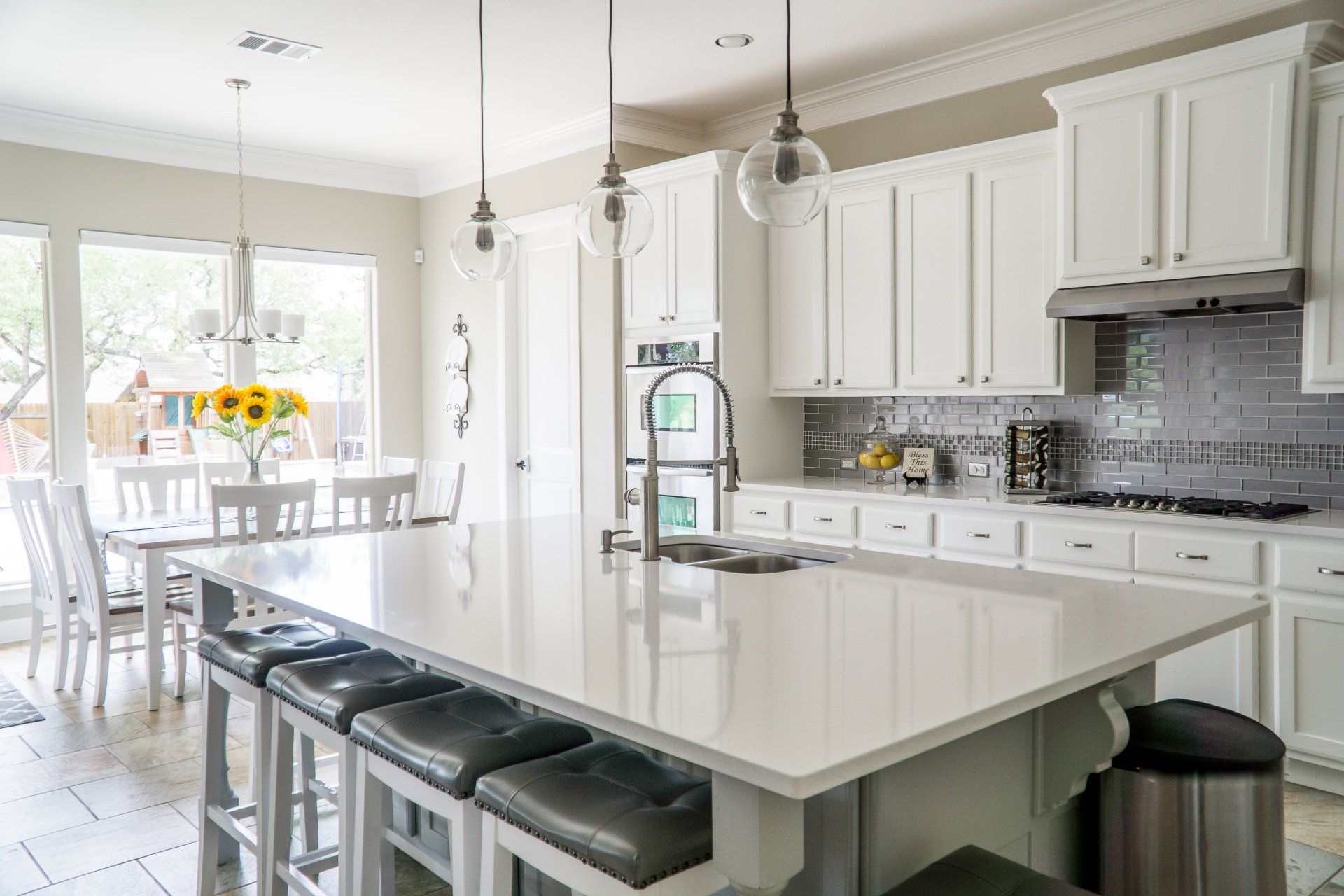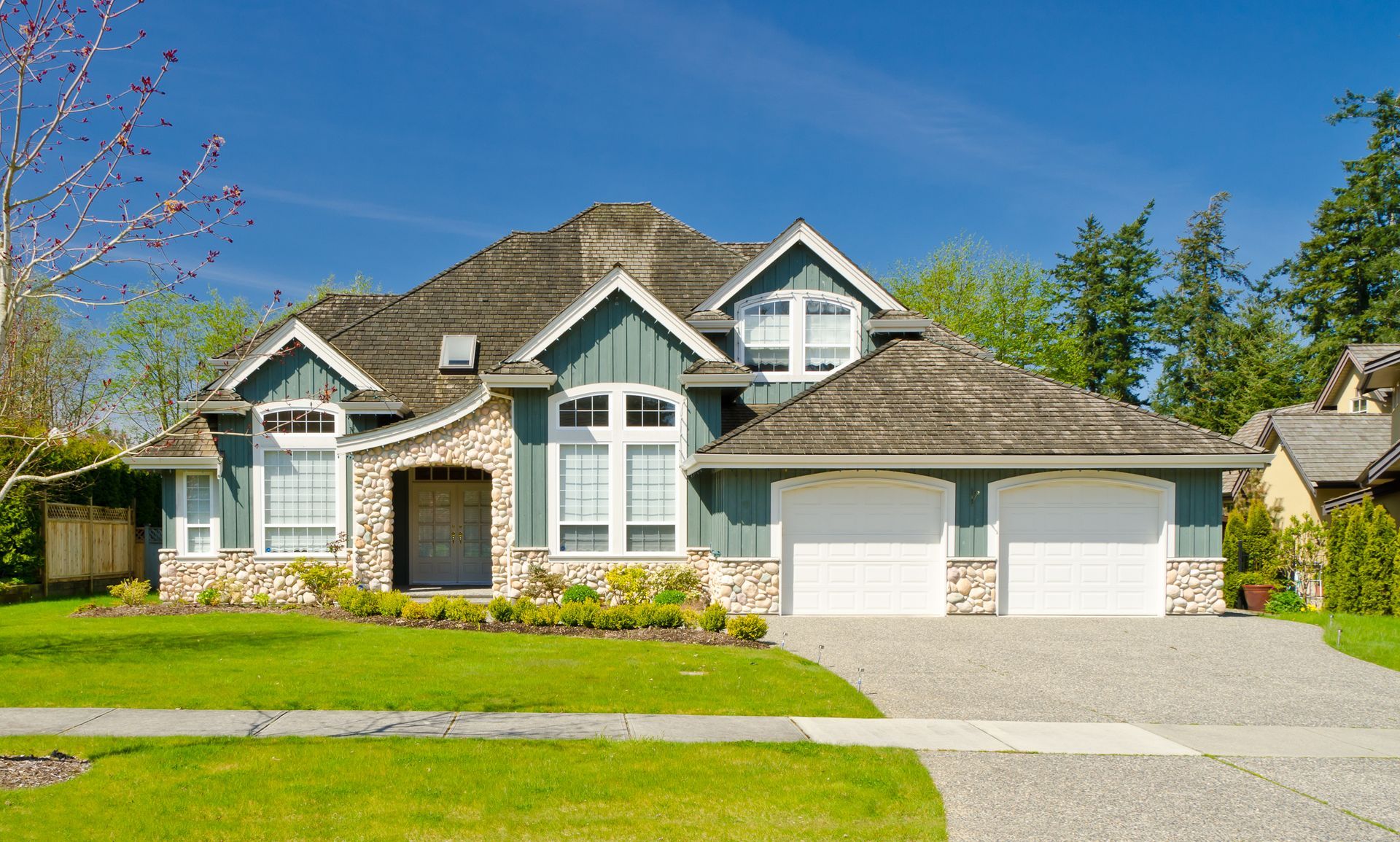
Why we click through every photo, and what AI changes about that
Think about the last time you 'searched' for a home. You opened Zillow — or Redfin, or Homes.com — and stared at a wall of thumbnails. You picked the one with the prettiest front yard. You clicked in. And then you started doing the only thing that actually matters.
You scrolled through every photo, one by one, and asked yourself questions the filters never let you ask.
Do I love this kitchen, or am I just tolerating it? Could I read in this bedroom on a Sunday morning? Is that bathroom dated in a charming way, or in a $40,000 way? Would my dog be happy here? Would my kids grow up here?
That's the search. That's what we actually do. Everything else — the price slider, the bed and bath dropdown, the school rating filter — that's just the doorway in. The home shopping happens in the photos. In the details. In the gut feel.
So why has the search bar refused to evolve in fifteen years?
Imagine searching for a feeling, not a checklist
I'm a realtor in Carmel, Indiana, and I've been quietly rebuilding the search on this site. Not as a tech demo, but as a question. What if you could just tell the search what you really want? Not '3 bed, 2 bath, $500k to $700k,' but 'a kitchen I'd actually want to cook Thanksgiving in.' Or 'a backyard where my kids could grow up.' Or 'a quiet street within walking distance of a coffee shop.'
It's a natural-language AI search that reads every photo caption, every description, and every detail in every active MLS listing the way a great agent would walk you through it. You ask in plain English. It answers in plain English. And the homes that come back are the ones that fit the life you're trying to build, not just the spreadsheet you're trying to fill.
Try it: 'show me modern kitchens'
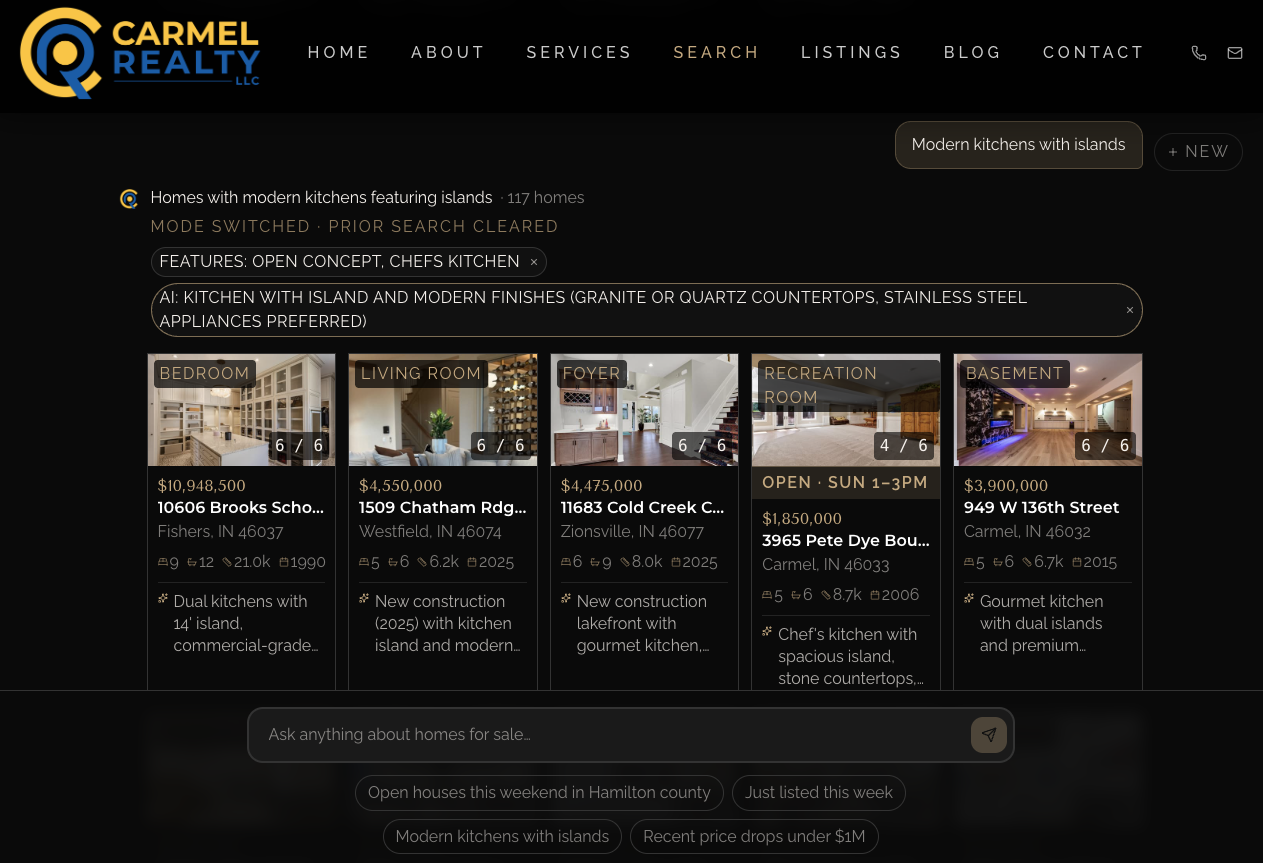
The AI doesn't just look at structured data fields. It actually reads the photos, captions, and descriptions across every active listing in Hamilton County, then surfaces the ones with kitchens that match what you mean — not what a filter assumes you mean.
Same goes for 'Carmel homes under $700k with a pool,' or 'Westfield ranches with a finished basement,' or 'Fishers neighborhoods near top schools.' Ask in plain English, and you'll get back homes that actually fit, not a list of false positives you have to mentally re-filter.
Or if you are shopping the higher end
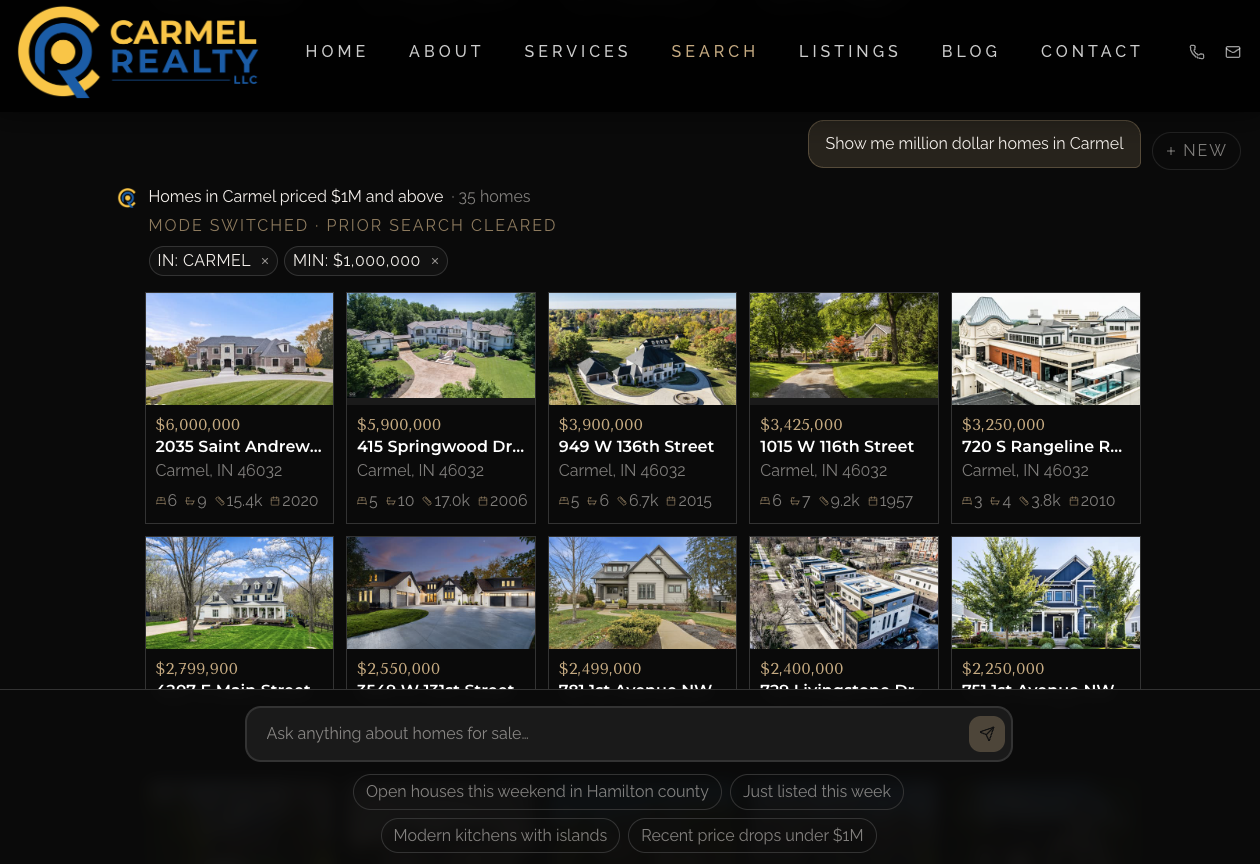
The same engine handles luxury searches just as gracefully. Ask for 'million-dollar Carmel homes with three-car garages,' or 'historic Carmel homes with original woodwork,' or 'new construction in Westfield with first-floor primary suites,' and the AI reasons across the photos and listing details to surface the ones that actually fit.
What we've been missing
For fifteen years, the home-search experience has trained us to treat shopping for the most emotional purchase of our lives like we're filtering a spreadsheet. We've been so conditioned to think of it as a filter problem that we've forgotten it was always an emotional one.
You don't fall in love with a checkbox. You fall in love with a kitchen, a window, a yard, a feeling.
My hope is that this new search lets you skip straight to that feeling — faster, with fewer false positives, and less noise. And when you find the one — the one that makes you slow down and zoom in on every photo — I would love to walk through it with you in person.